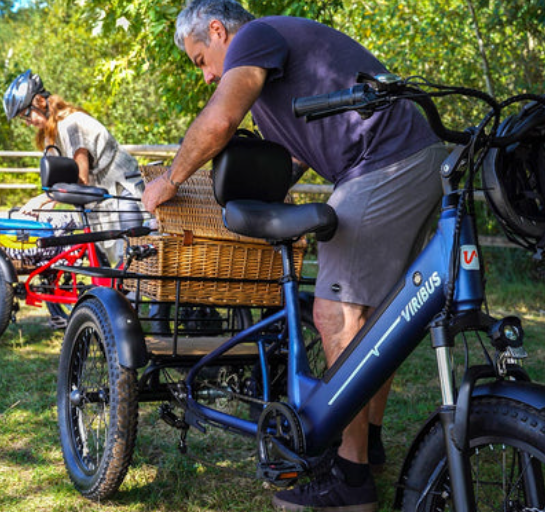
In 2026, a medical diagnosis doesn’t mean the end of your cycling days—it simply means you need a smarter tool for the job.
Whether you are managing the joint stiffness of arthritis, the tremors of Parkinson’s, or the uncertainty of vestibular balance issues, the right equipment can transition “exercise” from a chore into a form of therapy. But how do you choose the right model?
Here is our 2026 guide to selecting a Viribus adaptive tricycle tailored to your specific physical needs.
1. Cycling with Arthritis: Protecting Your Joints
For those with arthritis, the enemy is impact and range of motion. Traditional bikes require a high “swing” to mount and a hunched-over posture that punishes the wrists and lower back.
What to look for:
- Step-Through Frames: This is non-negotiable. You need a frame that allows you to step through the bike with only a 5- to 8-inch lift of the foot.
- Ergonomic Upright Geometry: Look for swept-back handlebars that allow your wrists to remain in a neutral, “handshake” position.
- The Electric “Boost”: On high-inflammation days, your joints might not want to push. A Step-Through E-Bike allows the motor to take over, keeping the joints moving (which reduces stiffness) without the strain of heavy resistance.
2. Navigating Parkinson’s: Rhythm and Stability
Research in 2026 continues to show that “forced exercise”—cycling at a consistent cadence—can significantly improve motor symptoms for those with Parkinson’s. However, the fear of falling can be a major barrier.
What to look for:
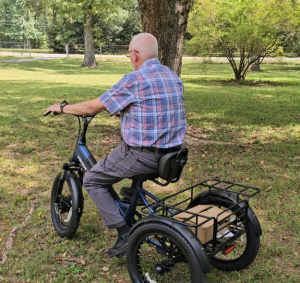
- Fixed Stability: A three-wheeled Adult Electric Tricycle provides a stable platform that doesn’t require the rider to maintain balance, even during a “freezing” episode or tremor.
- Gradual Power Delivery: You want a motor with a smooth “torque sensor” or predictable Pedal Assist (PAS). The Viribus 2026 motor system is tuned for a gentle start, preventing any “jerking” motions that might startle the rider.
- Dual-Braking Systems: Ensure the trike has easy-to-reach, responsive brakes that require minimal grip strength to engage.
3. Overcoming Balance Issues: Restoring Confidence
Whether caused by vertigo, inner-ear issues, or general aging, balance struggles often lead to a sedentary lifestyle. A tricycle is the ultimate “confidence machine.”
What to look for:
- Low Center of Gravity: Models with smaller wheels (like our 24″ Electric Tricycle) keep the rider closer to the ground, increasing stability.
- Parking Brakes: A simple but vital feature. This allows the rider to mount and dismount the bike while it is “locked” in place, so it won’t roll away during the transition.
- Wide Rear Wheelbase: The wider the back wheels, the more stable the turn. Our 2026 tricycle frames are engineered with an optimized width-to-height ratio to prevent tipping on corners.
2026 Feature Comparison for Adaptive Needs
| Feature | Best for Arthritis | Best for Parkinson’s | Best for Balance |
| Low Step-Through | ⭐⭐⭐ | ⭐⭐⭐ | ⭐⭐ |
| Electric Throttle | ⭐⭐⭐ | ⭐ | ⭐⭐⭐ |
| Wide Saddle/Seat | ⭐⭐⭐ | ⭐⭐ | ⭐⭐⭐ |
| 3-Wheel Stability | ⭐⭐ | ⭐⭐⭐ | ⭐⭐⭐ |
Why “Electric” is a Game Changer for Adaptive Riding
Many seniors ask, “Is an electric motor cheating?” In 2026, we view the motor as Access.
For someone with Parkinson’s or Arthritis, the motor is the difference between riding for 5 minutes and riding for 45 minutes. The longer you ride, the more your heart pumps, the more your joints lubricate, and the better you feel.